What is a Dementia-Friendly Community?
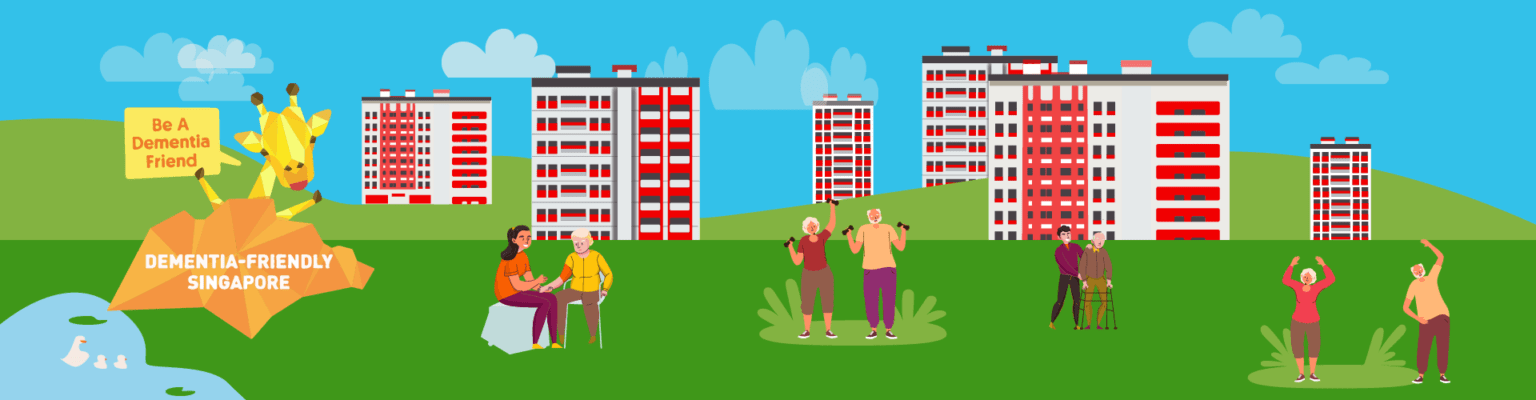
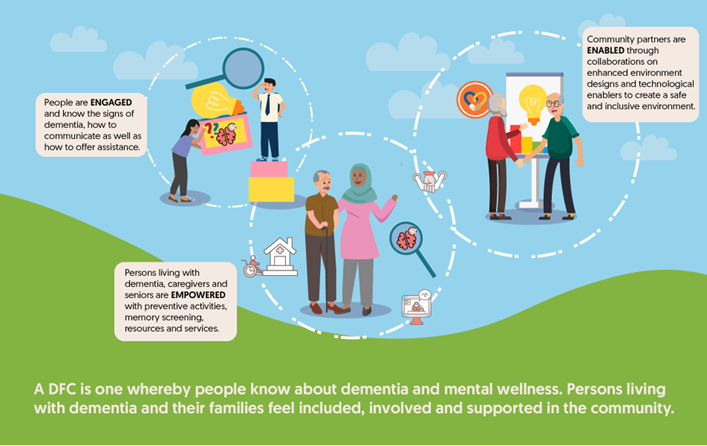
In a Dementia-Friendly Community (DFC), people are aware of and understand dementia. Persons living with dementia and their families feel included, involved and supported to continue living well in the neighbourhood.
How You Can Learn More About Dementia and Play a Part
- Know about dementia via talks and workshop
Through public education by the community partners, you can learn to recognise the signs and symptoms of dementia, understand the support services available in the community and gain knowledge on how to offer meaningful assistance to persons living with dementia.
- Undergo targeted screening for dementia and mental health
If you are concerned whether you or your loved one may be experiencing signs or symptoms of dementia, you can reach out to the community mental health teams for screening and/or support.
Click to find your nearest community mental health teams in your neighbourhood.
- Bring lost seniors to Dementia Go-To Points
Dementia Go-To Points (GTP) are safe community nodes where lost individuals can get help if they are lost or confused. Staff are trained to assist individuals who are brought to them to reunite with their caregivers. These community nodes support persons living with dementia and their caregivers through the following functions:
- Safe Return Point – Members of the public can being persons living with dementia who appear lost or unable to find their way home for staff assistance.
- Resource Centre – Cargivers and members of the public can access educational resources and useful information on dementia.
You can also download the CARA app to help those who have lost thei rway to locate the nearest Dementia GTPs.
Where and How You Can Find Support
- Early Identification, Therapy and Counselling
You can seek support from the community mental health teams where they will listen to your concerns, provide support, and connect you to relevant services if necessary.
- Social Engagement & Activities
A person living with dementia can continue to live a meaningful life when given opportunities for active living and social participation. Engaging in community activities, hobbies, and socialising with others not only strengthens your sense of purpose. It also fosters confidence, dignity, and inclusion.
- Caregiver Support Network (CSN)
Caring for a loved one living with dementia is a journey that can bring both joy and challenges. The Caregiver Support Network (CSN) offers a safe and welcoming space where caregivers can connect with other caregivers who understand their experiences through peer sharing, self-care initiatives, and learning practical coping tips. By joining their activities, you will find emotional support and useful resources that make your caregiving journey more manageable and fulfilling.
Find the nearest Caregiver Support Network in your neighbourhood.
How the Enhanced Environment Helps
- Wayfinding Murals & Signages
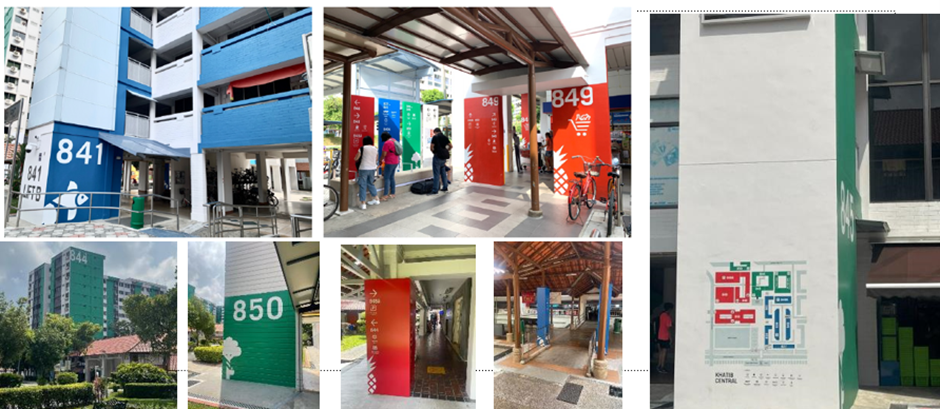
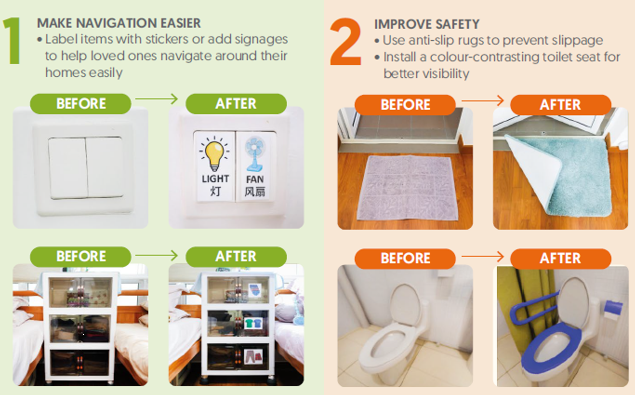
Sometimes, persons living with dementia may find it challenging to move around the neighbourhood and could even lose their way home. Having clear wayfinding features (such as mural paintings with familiar or recognisable objects like fish or fruits, and easy-to-read signages) make it easier for persons living with dementia to orientate themselves in the neighbourhood.